
Nikro Air Duct Cleaning in Cambridge: A Homeowner’s Guide
Any contractor can rent a Nikro unit. What separates a real negative-pressure cleaning from a machine parked in the driveway is how it’s run: the right CFM for your duct volume, continuous negative pressure during every brush pass, and HEPA-rated exhaust. Those three things are checkable before anyone touches your vents. This guide explains what Nikro equipment actually does, where it beats a rotary-only approach, and the questions that reveal whether the person holding the hose understands the machine or just borrowed the logo.
What Is Nikro Equipment, and Why Does It Matter?
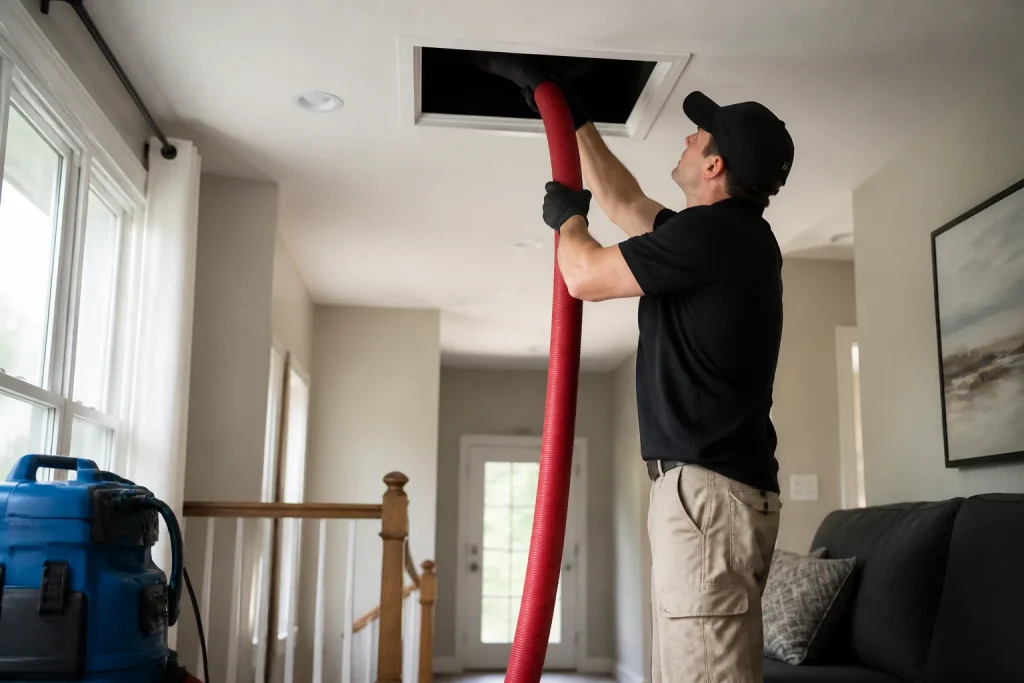
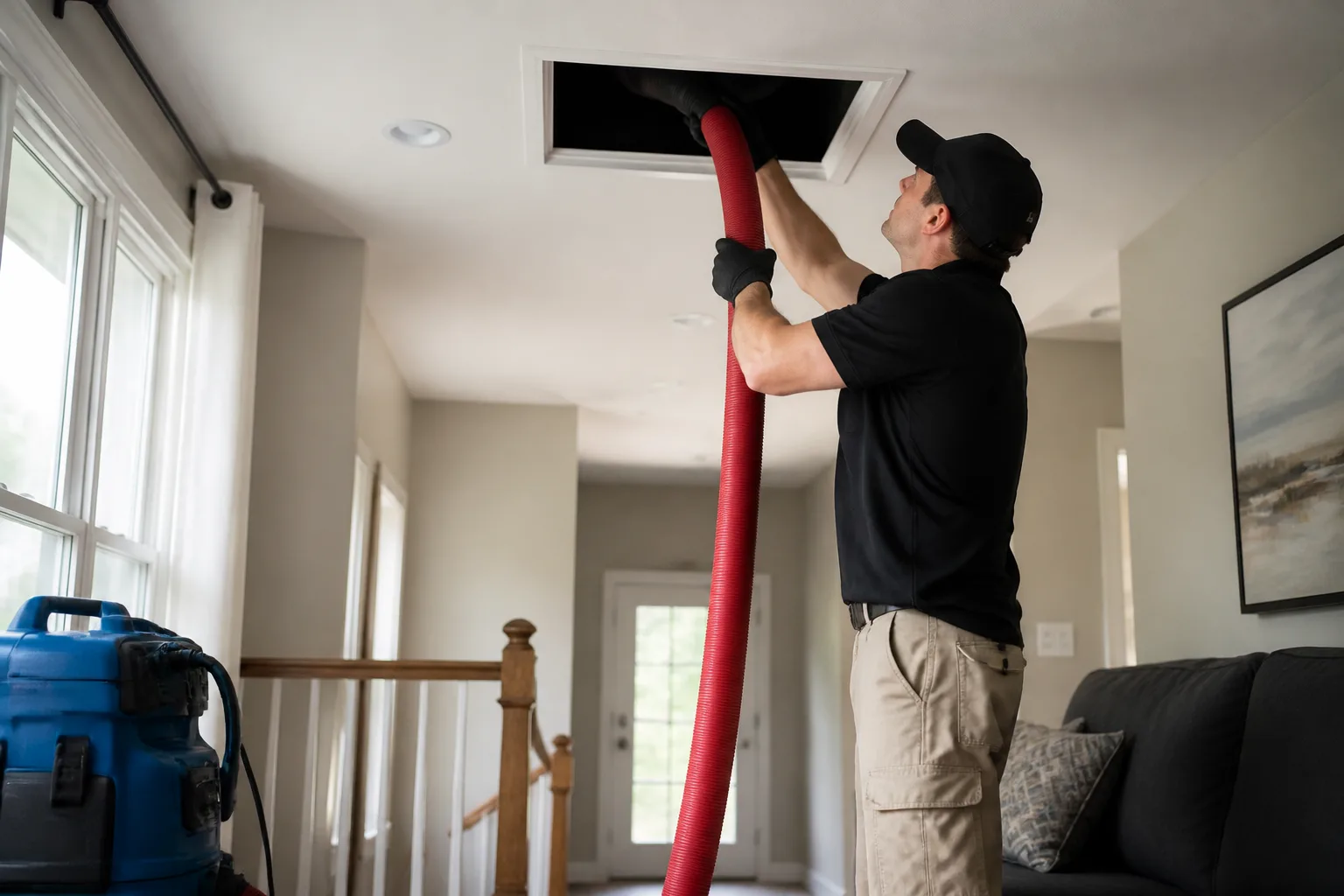
Nikro makes HEPA-rated vacuum and containment equipment used in remediation and restoration work. In a residential duct cleaning, the Nikro unit is the vacuum side of the system: it pulls the entire duct network into negative pressure so loosened debris travels toward the collection point instead of into your living room. That’s the whole point of containment, and it’s the part homeowners tend to underestimate.
Suction power alone doesn’t clean ducts. A strong vacuum with no seal at the register is just a loud machine pulling room air. What matters is that the system is closed off, the vacuum is pulling against a contained network, and the exhaust is filtered. On Nikro units, that exhaust runs through HEPA filtration, which is a meaningful distinction in a city where houses sit close together and share walls.
If you’ve read about Duct Cleaning Cambridge services and wondered what the equipment names actually mean, Nikro is the containment half of the picture. The rotary brush does the scrubbing. The Nikro unit makes sure what gets scrubbed doesn’t end up on your bookshelf.
Negative-Air Method vs. Contact Vacuum Cleaning
A contact vacuum touches the duct surface directly, usually through a hose and brush at each register. It works, but only where the tool reaches. A negative-air setup using a Nikro unit pressurizes the whole duct run into negative pressure and then agitates the interior with a rotary brush, so debris from the far end of a branch line moves toward the collection point rather than settling back down.
The mechanical difference in plain terms:
- Contact vacuum: localized suction at the register; effectiveness drops the further the debris sits from the opening.
- Negative-air containment: the entire duct network is held under vacuum while brushes agitate the interior; debris travels with the airflow toward the HEPA unit.
- Combined approach: rotary brush systems push debris loose and negative pressure carries it out. This is where Rotobrush and Nikro work as a pair rather than as competitors.
Why does this matter in Cambridge specifically? Much of the city’s housing stock is older and densely packed, with duct runs that were retrofitted into structures that weren’t designed around them. Branch runs in these homes can be short, oddly angled, or shared with a neighboring unit’s mechanical space. Contact vacuuming those runs only cleans what the hose can physically reach. Negative pressure doesn’t care about the angle.
If you’re curious about the full process, our air duct cleaning page walks through it step by step.
What CFM Rating Actually Fits Your Duct System?
CFM is cubic feet per minute, the measure of how much air the vacuum moves. More isn’t automatically better. Undersized and the containment fails. Oversized and you can pull debris past collection points or stress older ductwork. The right number depends on duct volume, which depends on the size of the system, not the square footage of the house alone.
As a rough guide, residential systems generally fall into a range that a properly equipped Nikro unit can handle comfortably. Light commercial spaces with longer main trunks need a different setup. The honest answer is that a contractor should calculate it on-site based on your duct volume, not quote a number over the phone.
Here’s the question that separates the two types of contractors: “What CFM is your unit rated for, and how does that match my duct volume?” A contractor who understands Nikro operation will answer with a calculation and explain their reasoning. A contractor who owns the machine as a prop will give you a number and change the subject. Ask it before they start.
Why HEPA Exhaust Filtration Is Non-Negotiable in Cambridge
Here’s the part that gets skipped in most sales conversations. A vacuum that collects debris but exhausts unfiltered air into the room hasn’t removed anything. It’s just moved it two feet to the left. HEPA-rated exhaust on the Nikro unit captures the fine particulate that would otherwise be released into the space you’re standing in.
In Cambridge, this matters more than in a spread-out suburb for a few reasons:
- Dense multi-unit housing means a cleaning in one unit can affect shared air paths.
- Older buildings often have tighter, less ventilated mechanical spaces.
- Homeowners pursuing duct cleaning for allergy or air-quality reasons are the exact people who shouldn’t be breathing exhaust particulate during the job.
Without HEPA exhaust, those particles go where the vacuum pushes them. With it, they’re captured. This isn’t a feature worth paying extra for; it’s the baseline for a legitimate operation. Our process pairs the Nikro HEPA setup with Cambridge-appropriate containment so the job stays clean from start to finish.
When Nikro Wins and When Rotobrush Wins
Neither piece of equipment is universally superior. They do different jobs, and a company that claims one machine handles everything is telling you what they own, not what works.
Where Nikro negative-air containment fits best:
- Main trunks and long plenum runs where debris volume is high.
- Older ductwork with surface contamination that needs to be drawn out rather than scrubbed.
- Any job where air quality during cleaning is part of the concern.
Where Rotobrush rotary equipment fits best:
- Branch runs, where a rotating brush can reach around bends a vacuum alone can’t agitate.
- Duct interiors with caked-on buildup that needs mechanical loosening before suction does anything.
- Tight residential branch lines common in Cambridge’s older homes.
In practice, the two work together: Rotobrush loosens, Nikro contains. If a contractor shows up with only one of them and can’t explain why, that’s your answer.
One more piece worth knowing: cleaning is only half the job if the ductwork itself is compromised. Loose joints and disconnected branches let conditioned air leak into a crawl space instead of a room. That’s why we handle air duct repair alongside cleaning, and why we’re set up to work with indoor air quality hardware from Honeywell and Aprilaire when the system calls for it.
Questions That Reveal Whether They Understand the Machine
The logo on the side of the vacuum proves almost nothing. The answers to these questions do:
- “Will you hold continuous negative pressure during brush passes, or do you cycle the vacuum?” Continuous pressure is the whole point of the method. On-and-off running defeats it.
- “Is your exhaust HEPA-rated, and can you show me the filter?” Any honest operator will show you.
- “How will you confirm the containment seal at each register?” There should be a process, not a shrug.
- “What CFM are you running, and why does that match my system?” The calculation question again, because it’s the one that separates understanding from owning.
- “Can I see before-and-after photos of my own ducts?” Yours, not a stock gallery.
We’ve found that the contractors worth hiring actually enjoy these questions. It gives them a chance to talk about the work. The ones who get defensive are usually telling you something useful.
The same logic applies to your dryer vent. It’s a separate system, a real fire risk, and worth its own inspection: dryer vent cleaning tackles it directly rather than as an afterthought.
When to Call a Pro
Some of this is verifiable at home. You can look at your vents, notice dust streaks around registers, or track how long your dryer takes on a load. You can’t calculate your duct volume, run a negative-pressure test, or confirm HEPA exhaust on your own equipment.
If you’ve had an HVAC technician flag visible buildup, if allergies seem worse since you moved in, or if your dryer’s taking noticeably longer to finish a cycle, those are the signals that a proper inspection makes sense. Professional-grade equipment isn’t a luxury in those cases; it’s the difference between cleaning and rearranging. For an exact quote, estimates are free.
The Bottom Line
Nikro equipment represents a specific approach: full-network negative pressure, HEPA-filtered exhaust, and CFM sized to the job. The brand matters less than whether the operator can explain how they’re running it. Ask about pressure continuity, exhaust filtration, CFM matching, and containment seals. Ask to see before-and-after photos of your own system. The contractor who answers all four will do a better job than the one who just shows up with the unit and a hose.
Our technicians have up to 11 years of experience running this equipment. If you’re in Cambridge and need help, Duct Cleaning Cambridge offers free estimates: call (888) 393-0038. We answer 24/7. Fast dispatch from 7am to 7pm, Sunday through Friday.
Frequently Asked Questions
Yes, for one main reason: HEPA-rated exhaust filtration. A shop vacuum collects debris but can exhaust fine particulate back into the room. A Nikro unit filters the air it pushes out, which is the entire point of containment. Call (888) 393-0038 with your system details and we’ll tell you which setup fits.
Ask four things: continuous negative pressure during brush passes, HEPA-rated exhaust (and ask to see the filter), the CFM rating and why it matches your duct volume, and before-and-after photos of your own ducts. Any contractor who can answer all four understands the operation. Call (888) 393-0038 for a straight answer on our setup.
Older and multi-unit homes with retrofitted or tightly packed ductwork benefit most, because branch runs are often short, angled, or shared. Negative pressure reaches what a contact vacuum can’t. If you’re unsure what your home’s system looks like, call (888) 393-0038.
Usually, yes: Rotobrush agitates the duct interior and Nikro contains what gets loosened, so they work as a pair. A company running only one should be able to explain why the other isn’t needed. Call (888) 393-0038 for a free estimate on your system.
Written by the team at Duct Cleaning Cambridge.
Need Air Duct Cleaning Help?
Call Duct Cleaning Cambridge - licensed & insured, with free written estimates in Cambridge.
(888) 393-0038