
Last updated November 15, 2026
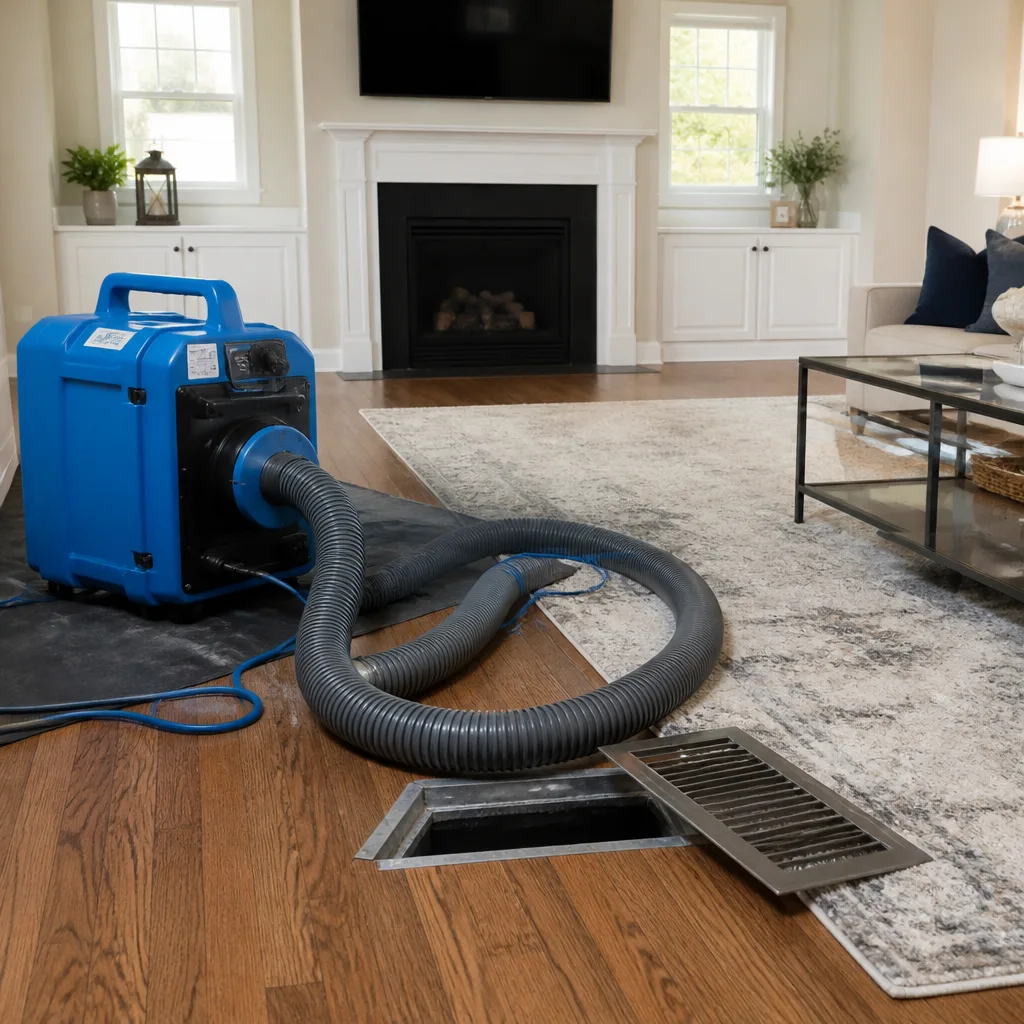 Whole-home duct cleaning
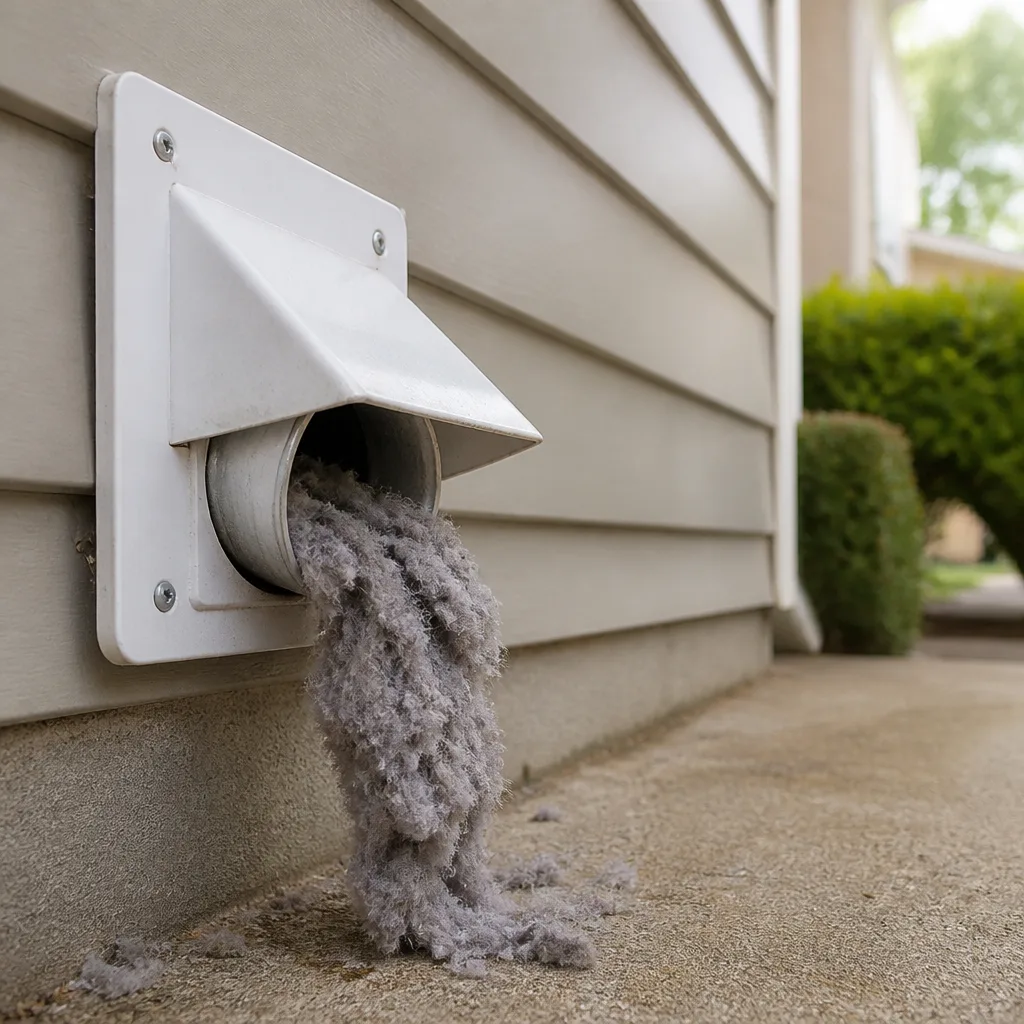 Dryer vent cleaning
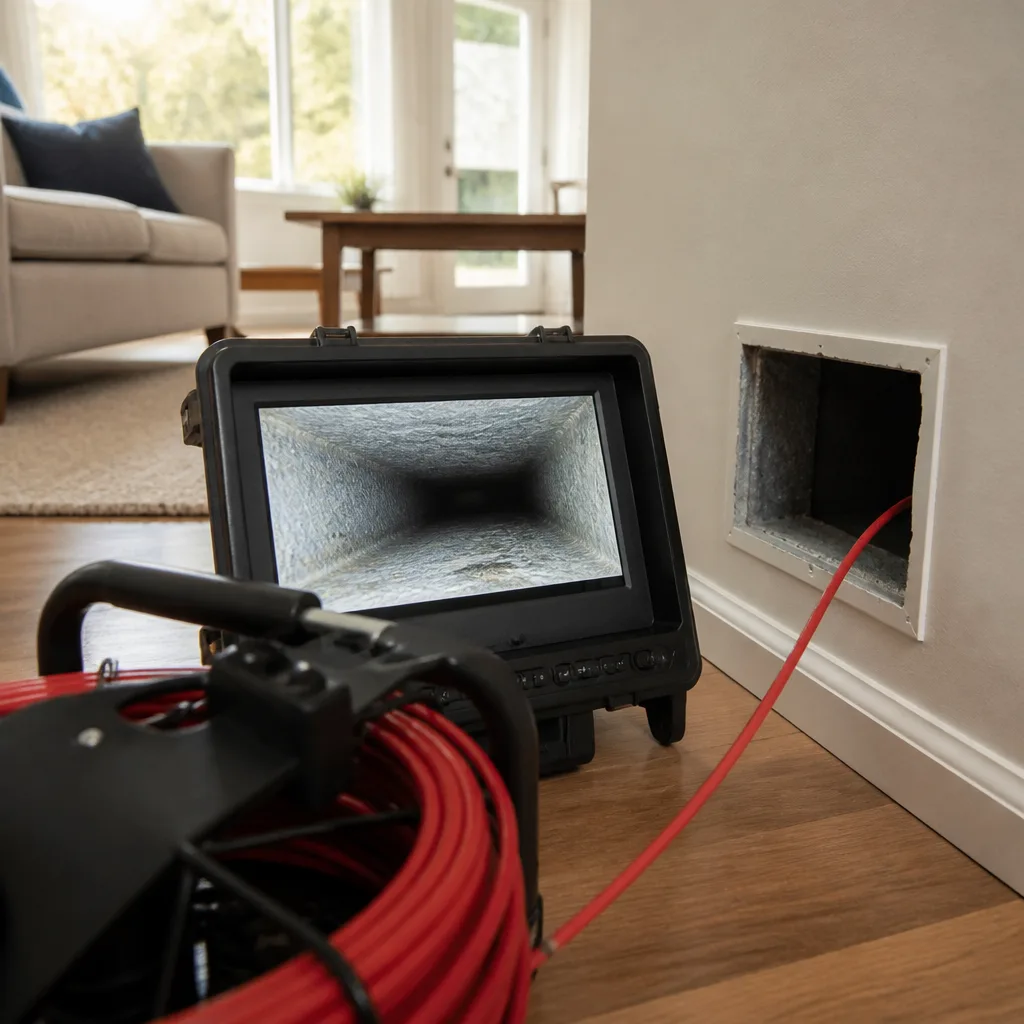 Camera inspection
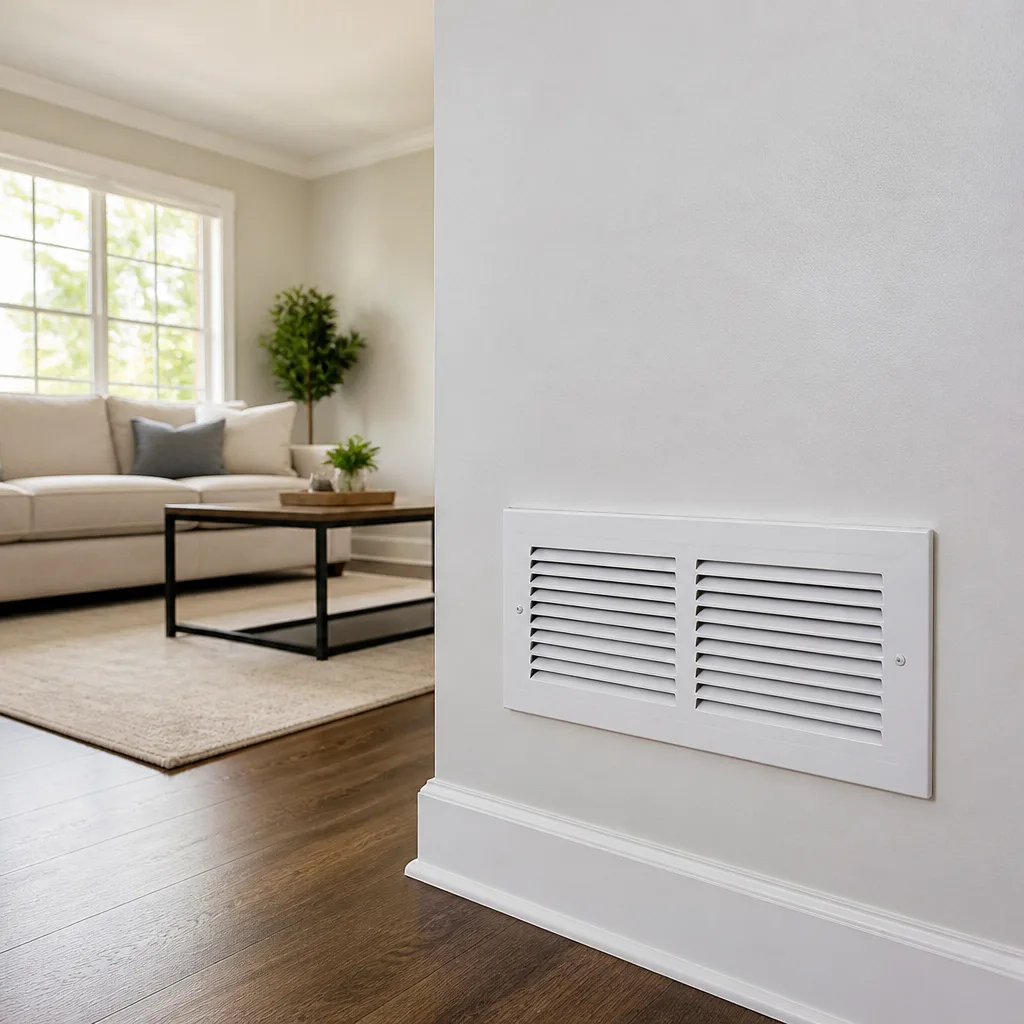 Sanitizing & deodorizing
Whole-system duct and dryer vent check with before-and-after photos - you see exactly what came out of your vents
That "$99 whole-house special" is a bait ad - the real number appears once they are in your hallway, or the "clean" is a shop-vac at the register. We photograph the inside of your ducts before and after instead.
How to Hire an Air Duct Cleaning Contractor in Cambridge: A Step-by-Step Guide
Any company can tell you they use “professional equipment.” The difference is whether they can name it. Ask a contractor what negative air machine they’ll bring into your home, what its CFM rating is, and whether they run rotary contact cleaning or air sweep only, and you’ll learn more in thirty seconds than a brochure will tell you in a year. Most homeowners never ask, which is exactly why so many Cambridge jobs get done with a shop vac and a smile. Here’s how to separate the two, from the first call to the final inspection.
Quick Answer
To hire an air duct cleaning contractor in Cambridge, verify three things before you book: the make and model of the negative air machine and its CFM rating, the type of cleaning method (rotary contact cleaning, not air sweep alone), and how the crew creates containment at the air handler. Massachusetts doesn’t license duct cleaners, so equipment verification and NADCA membership are your best proxies for competence. Get a written, itemized quote after a site visit, and treat a flat-rate price with no inspection as a yellow flag.
Styles & brands we work with
- Whole-home duct cleaning
- Dryer vent cleaning
- Camera inspection
- Sanitizing & deodorizing
Table of Contents
- Why Massachusetts Doesn’t License Duct Cleaners (And What to Check Instead)
- The Five Questions to Ask Before You Book
- How to Read a Duct Cleaning Quote
- What Professional Equipment Actually Looks Like
- What to Expect on Job Day
- Red Flags in the Cambridge Market
- Cleaning vs. Repair: When Broken Ducts Change the Job
- The Dryer Vent Question Most Homeowners Skip
Why Massachusetts Doesn’t License Duct Cleaners (And What to Check Instead)
Massachusetts does not issue a state license for duct cleaning. That’s the single most important fact in this guide, because it means there’s no official board to verify a contractor against, no exam they had to pass, and no license number you can look up before they pull into your driveway. Anyone with a truck and a vacuum can legally advertise air duct cleaning in Cambridge.
Since the state won’t vet them for you, you have to lean on proxies. The strongest ones:
- NADCA membership. The National Air Duct Cleaners Association sets a written standard for how the work should be done. A company that pays dues and follows the standard is at least signaling that it knows what the standard is.
- EPA lead-safe certification (RRP). In Cambridge this matters more than in most places. A large share of the housing stock predates 1978, and duct work in older homes often runs through spaces where disturbing dust and paint is a real concern. Ask directly whether the crew is lead-safe certified. A contractor who doesn’t know what RRP stands for has no business working in a pre-1978 house.
- Insurance and bonding. Ask for a certificate of insurance. This is separate from licensing, and it’s the thing that protects you if something gets damaged.
- References in Cambridge. A contractor who can point to work in Cambridge neighborhoods, not just “the Greater Boston area,” has had to solve the specific problems this city’s housing creates.
None of these together equal a license. But bundled, they’re a reasonable screen. If a company can’t clear all four, keep looking. For a broader look at the service itself, our air duct cleaning page walks through what a full system cleaning involves.
The Five Questions to Ask Before You Book
These are the questions that separate a professional crew from a guy with a vacuum. Write them down. Ask them on the phone before anyone comes out. A confident, competent contractor will answer them without hesitation. A contractor who gets vague or defensive is telling you something useful.
- “What negative air machine do you use, and what’s its CFM?” The negative air machine is the vacuum that pulls dust out of your system and holds it in a HEPA-rated container. CFM stands for cubic feet per minute, and it’s the measure of how much air the machine moves. A machine with real pulling power is the difference between cleaning ducts and stirring them up. If they can’t name the make and give you a CFM figure, that’s your answer.
- “Do you use rotary contact cleaning or air sweep only?” Air sweep alone blows air through the ducts and hopes the dust comes loose. Rotary contact cleaning runs a rotating brush through the duct to physically scrub the surfaces. Contact cleaning is what actually removes built-up debris. Air sweep alone is a red flag.
- “How do you create containment at the air handler?” The air handler is the furnace or AC unit that moves air through your ducts. If it isn’t sealed off and put under negative pressure during cleaning, dust escapes into the rooms you live in. The answer should describe a real containment setup, not “we’re careful.”
- “Will you show me before-and-after photos of my own ducts?” Not stock photos from a website. Photos taken in your house, that day, with an inspection camera. This is how you verify the work was actually done.
- “Is the price a flat rate per system, or per vent?” Per-vent pricing encourages a fast, superficial pass through each register. A flat price per system, agreed in writing before work starts, means the crew is paid to do the whole job right.
Ask these five before you book, and you’ll have filtered out a large share of the field in Cambridge before anyone sets foot in your home.
How to Read a Duct Cleaning Quote
A duct cleaning quote should be a written document, produced after someone has actually looked at your system. Not a price read over the phone. Not a flat rate from a website form. A site visit matters because the number of supply and return runs, the accessibility of the air handler, and the condition of the ductwork all change the job.
Line items that should appear
- System type and scope. Supply runs, return runs, and the air handler, each accounted for.
- Equipment named. The negative air machine and the cleaning method, in writing.
- Containment method. How the air handler will be sealed and protected.
- Inspection protocol. Whether before-and-after photos will be provided.
- Any repair items identified. If the site visit turns up compromised ductwork, it should be listed separately with its own price.
What shouldn’t appear: a price with no context, vague phrases like “full system clean” with no breakdown, or an antimicrobial treatment bundling price welded onto the base quote with no explanation.
Why a flat rate with no visit is a yellow flag
A quote without a site visit means the contractor is guessing at your system, or worse, planning to discover “problems” once they’re inside. The low teaser price that swells into a much larger invoice is the industry’s most common complaint, and a no-visit quote is how it starts. Read every quote as a document you’ll compare against another one. Insist that the written estimate sets the final price. When you’re ready to compare, our Duct Cleaning Cambridge team will put a written estimate in your hands before any work is scheduled.
What Professional Equipment Actually Looks Like
This is where the research pays off. If you know what real equipment looks like, you can spot its absence immediately. Professional-grade duct cleaning isn’t one tool. It’s a system of tools that work together.
- Rotary brush systems (Rotobrush). A rotating brush on a flexible shaft that scrubs the inside surfaces of the duct. This is what separates contact cleaning from air sweep.
- HEPA-rated vacuum equipment (Nikro). HEPA-rated containment means the machine captures fine particulate rather than exhausting it into the room. On older Cambridge homes with decades of accumulated dust, this matters.
- Air filtration and containment (Abatement Technologies). For jobs that require serious filtration and containment, professional-grade units are used to hold the work area under control.
The tell is simple: a competent contractor will name their equipment without prompting. If they can’t, or if the answer is “we use a really powerful vacuum,” that’s the whole story. A shop vac can’t move enough air to clean a duct system, and no amount of confidence changes the physics. Companies that invest in Rotobrush and Nikro equipment have decided the work is worth doing properly. That decision shows up at your door.
What to Expect on Job Day
You don’t need to supervise, but knowing the sequence lets you tell whether a crew is following the process or cutting corners. Here’s how a professional job typically runs.
- Walkthrough and access points. The crew confirms where registers are, identifies the air handler, and locates any access panels needed. In older Cambridge homes, access can be tight, and a crew that knows what it’s doing will have a plan for it.
- Containment setup. The air handler gets sealed off and the work area is put under negative pressure with the HEPA machine. This happens before any cleaning starts. If they skip straight to cleaning, they’re skipping containment.
- Rotary contact cleaning. The rotary brush runs each run of ductwork, scrubbing loose the accumulated debris, which the negative air machine pulls into containment.
- Before-and-after inspection. A camera goes inside the ducts before and after cleaning. Photos are taken. You see them.
- Air handler and component cleaning. The blower, coil, and related components get attention too, since they’re part of the system.
- Containment breakdown and cleanup. Equipment comes out, the work area is returned to how it was found, and you get your written summary.
If a crew moves through these steps in order, taking real time on the cleaning and the inspection, you’re getting a professional job. If the air handler was never sealed, or the inspection is a quick glance rather than a camera run, you’ve learned something.
Red Flags in the Cambridge Market
Cambridge has a competitive market for duct cleaning, and a few patterns repeat. Knowing them saves you from the most common baits.
- “Whole house” deals priced under $200. Real contact cleaning with HEPA containment costs more to deliver than a very low price can support. When a price is far below the field, something in the process is being cut, or an upsell is coming.
- Crews that show up with shop vacs. If there’s no rotary brush and no HEPA vacuum, you’re not getting a duct cleaning. You’re getting a surface vacuuming with the register grates off.
- Upsell pressure for antimicrobial treatments. Antimicrobial treatments are pitched as a way to “sanitize” ducts. The honest version is that if the ducts are cleaned properly, the treatment is often unnecessary, and it shouldn’t be sold as mandatory. Ask why it’s needed. A vague answer is your answer.
- No site visit before a quote. Already covered, but it bears repeating: the price should follow an inspection, not precede it.
- No before-and-after photos of your own system. The photos are the proof. If they aren’t offered, ask, and if the ask gets deflected, that’s a red flag of its own.
- A crew that can’t name their equipment. Back to the thesis. If they can’t name the negative air machine and its CFM, they either don’t know or don’t want you to know.
Cleaning vs. Repair: When Broken Ducts Change the Job
Cleaning a compromised duct system is like shining shoes that need resoling. If the ductwork is disconnected at a joint, crushed in a tight run, or leaking at a seam, cleaning doesn’t fix that, and the system still won’t distribute air the way it should. A thorough cleaning often finds these problems, which is why the contractor you hire should be able to repair them, not just recommend someone else.
This is where a lot of duct cleaning jobs in Cambridge end up: an older home, a duct run that was never sealed properly, or a flexible duct section that’s come apart in a hot attic. If the crew that cleans your ducts can also repair them, you avoid coordinating a second contractor and a second site visit. Ask upfront whether repair capability exists in-house, and if it doesn’t, ask how they handle the problem when they find it. Closing that gap is part of what we mean when we say we clean it, and if it’s broken, we fix it.
For a closer look at how we approach the service in this city, see our Cambridge page. And if you’ve noticed your dryer taking twice as long to dry its load, that’s the next section’s problem.
The Dryer Vent Question Most Homeowners Skip
Air duct cleaning and dryer vent cleaning look related and get lumped together, but they’re separate jobs with separate risks. The dryer vent is the exhaust path that carries hot, moisture-laden air and lint out of your home. When lint accumulates in that path, it can catch fire. That makes the dryer vent a genuine safety item, not an upsell, and it’s worth cleaning on its own schedule regardless of when the air ducts get cleaned.
If your dryer is taking longer than it used to, if the load comes out warm and damp, or if you haven’t had the vent cleaned since you moved in, it’s worth a look. The job is fast and the equipment is the same kind of professional-grade kit used for duct work. Ask your contractor whether they offer dryer vent cleaning as a standalone service, or whether it’s bundled into a package you don’t need. It should be available on its own. Our dryer vent cleaning page covers the process. And if your ducts are overdue for a look, or your system has been showing signs of trouble, don’t wait for a problem to announce itself.
Common Mistakes to Avoid
- Booking on price alone. The lowest quote is usually lowest for a reason, and the reason is usually what’s missing from the process. Compare the equipment and the scope, not just the number.
- Skipping the site visit. A quote without a real inspection is a guess, and guesses are how teaser prices turn into bigger invoices. Insist on a walkthrough before you sign anything.
- Not asking about lead-safe certification. In older Cambridge homes, disturbing dust during a cleaning without lead-safe protocols is a real risk. Ask, and accept nothing but a clear yes.
- Confusing air sweep with contact cleaning. One cleans the ducts. The other just moves air through them. Know which you’re paying for.
- Accepting antimicrobial treatments without a reason. If it’s pitched as mandatory, ask what it’s treating. Proper cleaning often makes it unnecessary.
- Forgetting the dryer vent. It’s a separate job with its own fire risk, and it doesn’t get handled by cleaning the air ducts. Clean it on its own schedule.
- Not asking for before-and-after photos. The photos are your proof the work happened. Ask for them of your own system, not stock images.
Our technicians have up to 11 years of experience, and the difference between a job that lasts and one that doesn’t often comes down to whether the contractor took these checks seriously.
See the difference
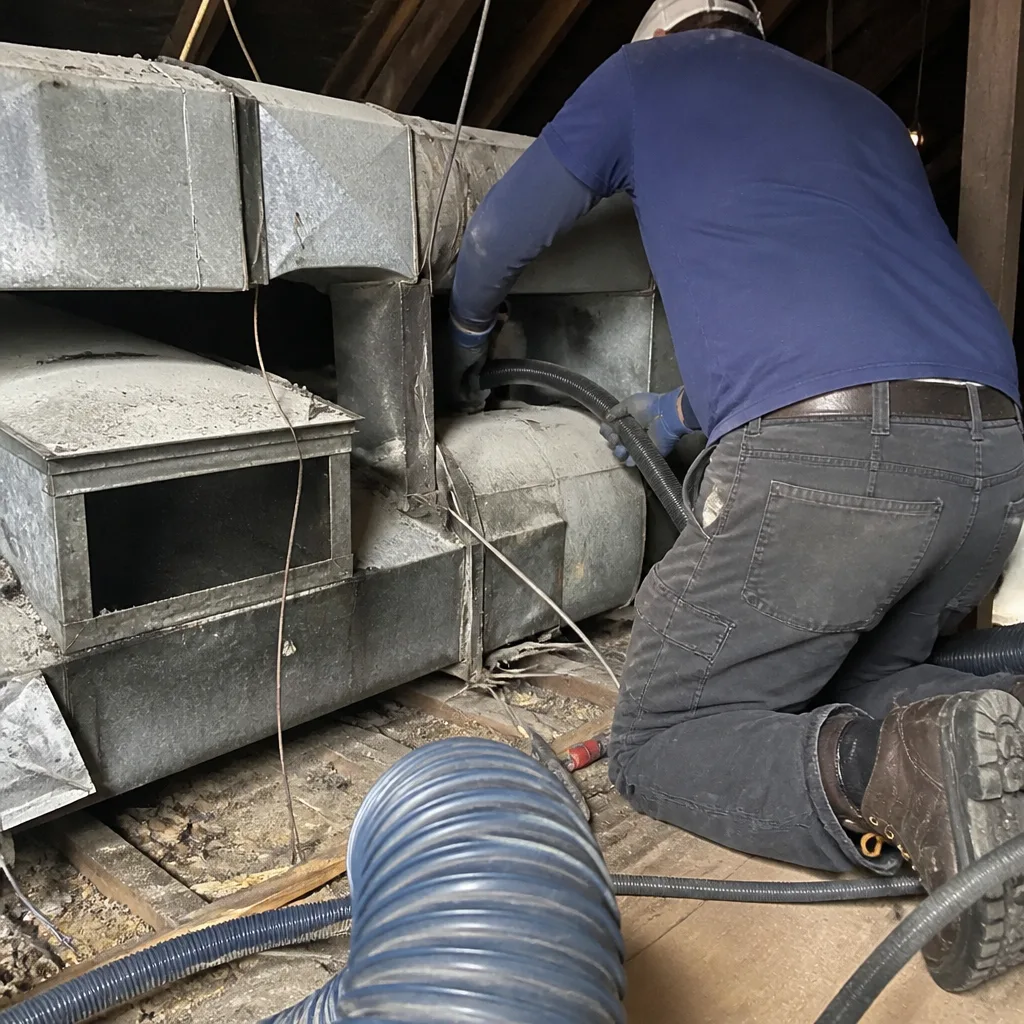 Before
 After
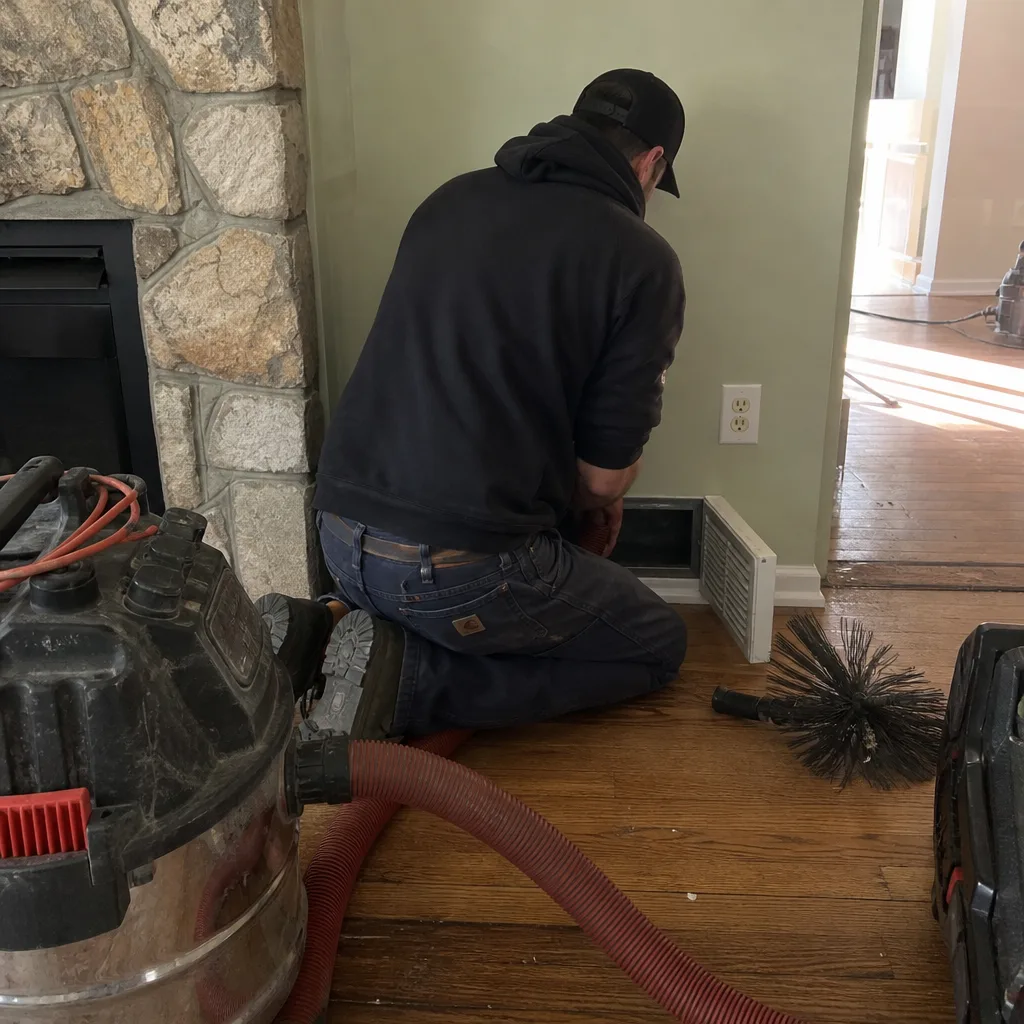 Before
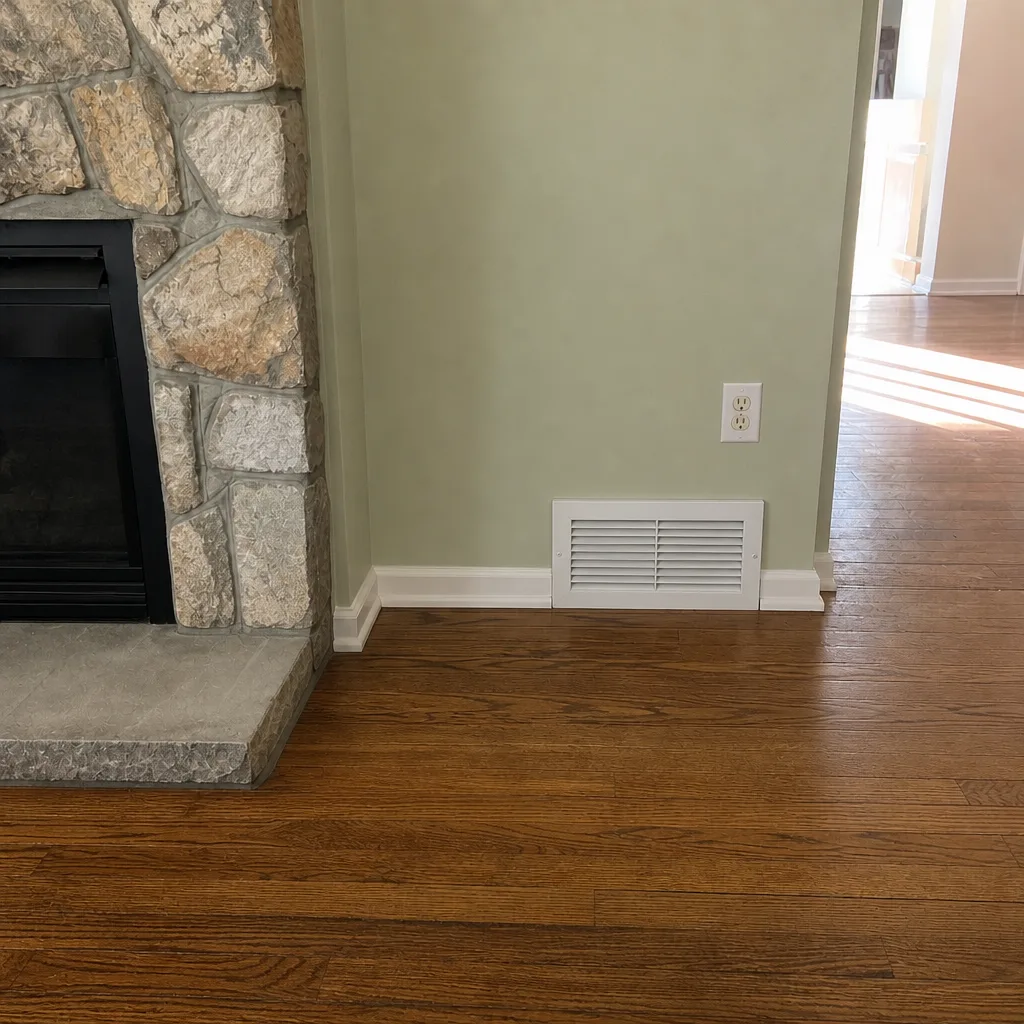 After
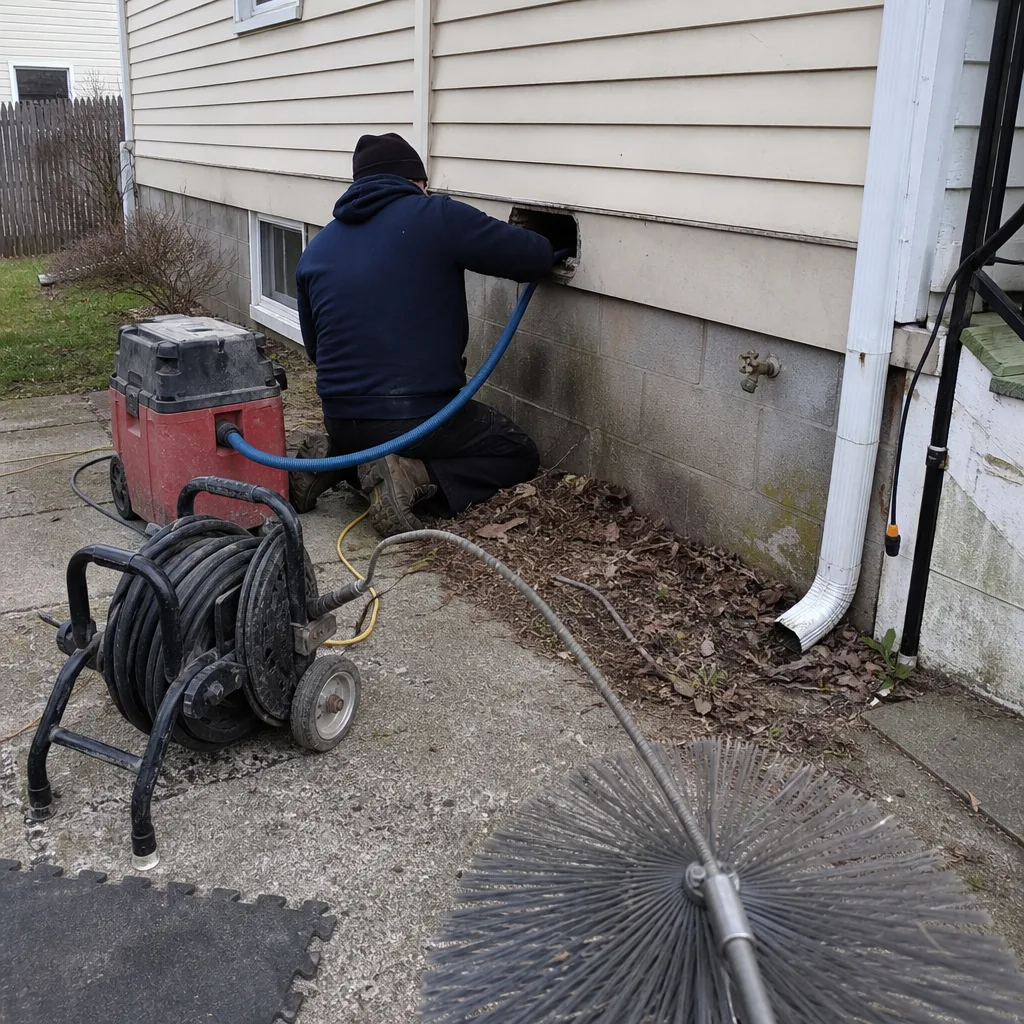 Before
 After
When to Call a Professional
Some signs are worth acting on without waiting. If you’ve just moved into a Cambridge home and don’t know when the ducts were last cleaned, if your allergy symptoms seem to worsen indoors, if your HVAC technician flagged the ducts during a service call, or if you’ve noticed reduced airflow from the registers, it’s time to have the system looked at. Visible dust blowing from the vents, a musty smell when the system kicks on, or a dryer that suddenly takes twice as long to dry are all reasons to call. None of these are emergencies, but none of them improve with waiting.
Duct Cleaning Cambridge offers free estimates in Cambridge. Call (888) 393-0038. We answer 24/7. Fast dispatch from 7am to 7pm.
Frequently Asked Questions
Duct cleaning is priced per system, not per vent, and the total depends on the size and condition of your system, the accessibility of the air handler, and whether any repair is needed. You’ll get a written estimate after a site visit, and that figure sets the final price. Call (888) 393-0038 for an exact quote. Estimates are free.
It’s best to be home, at least at the start and end of the job. You’ll want to confirm the walkthrough, see the containment setup, and review the before-and-after photos with the crew before they leave. Being present for the full job isn’t required.
Lower quotes usually skip something: HEPA-rated containment, rotary contact cleaning, before-and-after inspection, or the site visit itself. A price far below the field is often a teaser that grows once the crew is inside. Ask every contractor the same five questions and compare the answers, not just the numbers. Call (888) 393-0038 to compare a written estimate.
Before-and-after photos of your own ducts, taken with an inspection camera during the visit, are the proof. Ask for them upfront. A contractor who takes the photos as a matter of course is a contractor who expects the work to hold up to scrutiny.
There’s no fixed interval that fits every home. Homes with pets, smokers, recent renovations, or chronic dust issues tend to need it more often than a clean, low-traffic home. A look at the system during an HVAC service is a reasonable trigger for a decision. Dryer vents should be checked on a shorter cycle than air ducts, since lint accumulation is a fire risk.
Usually not. Proper rotary contact cleaning with HEPA containment removes the debris that treatments are marketed against. If a contractor presents antimicrobial treatment as mandatory, ask what specifically it’s treating. A clear, non-defensive answer is what you want. Call (888) 393-0038 for a straight answer on what your system actually needs.
The Bottom Line
Hiring a duct cleaning contractor in Cambridge comes down to what the state can’t check for you. There’s no license to verify, so you verify the equipment, the method, the containment, and the quote. Ask the five questions. Insist on a site visit and a written, itemized estimate. Look for NADCA membership and lead-safe certification, especially in older homes. Watch for teaser pricing, shop vacs, and antimicrobial upsells. And if the ducts are compromised, make sure the contractor can repair them, not just clean them. Do that, and the hiring decision becomes straightforward.
Call (888) 393-0038 for a free estimate. We answer 24/7. Fast dispatch from 7am to 7pm.
Written by the team at Duct Cleaning Cambridge.