
Last updated November 15, 2026
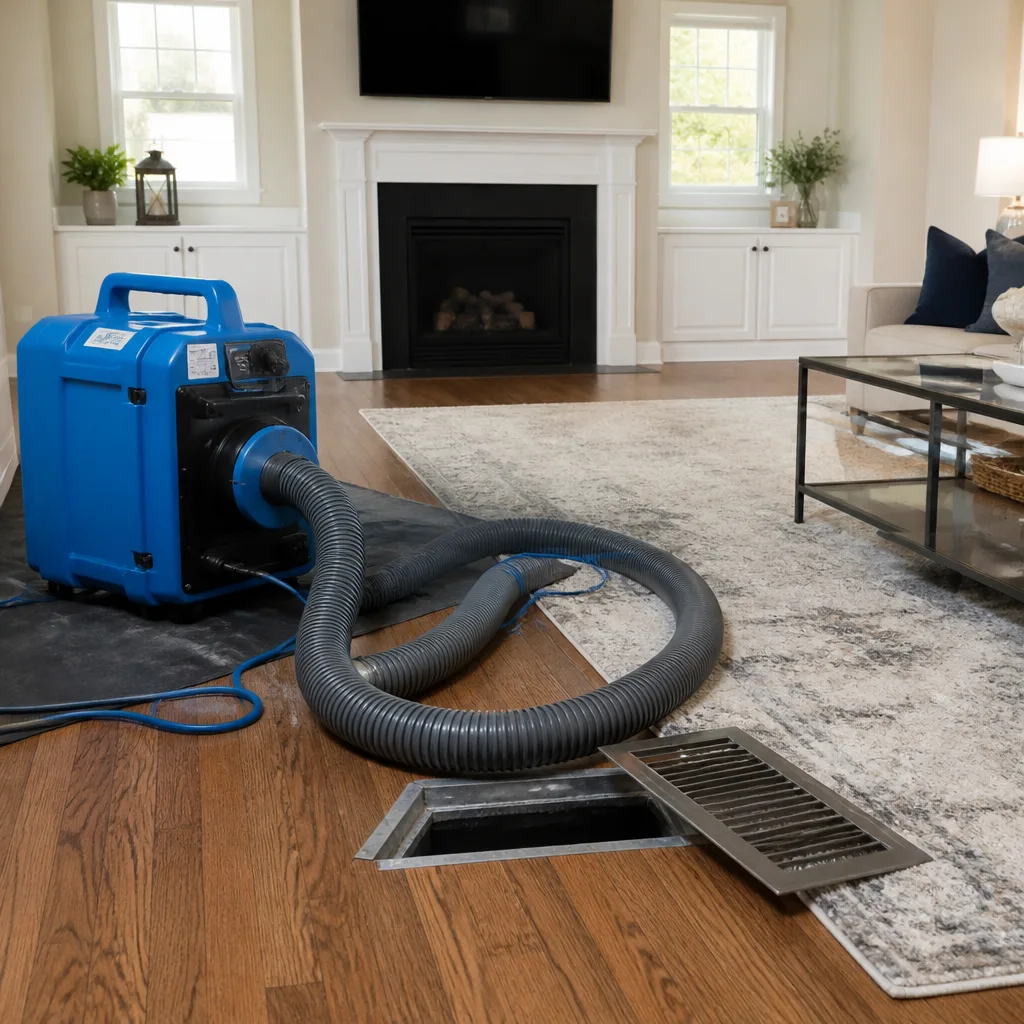 Whole-home duct cleaning
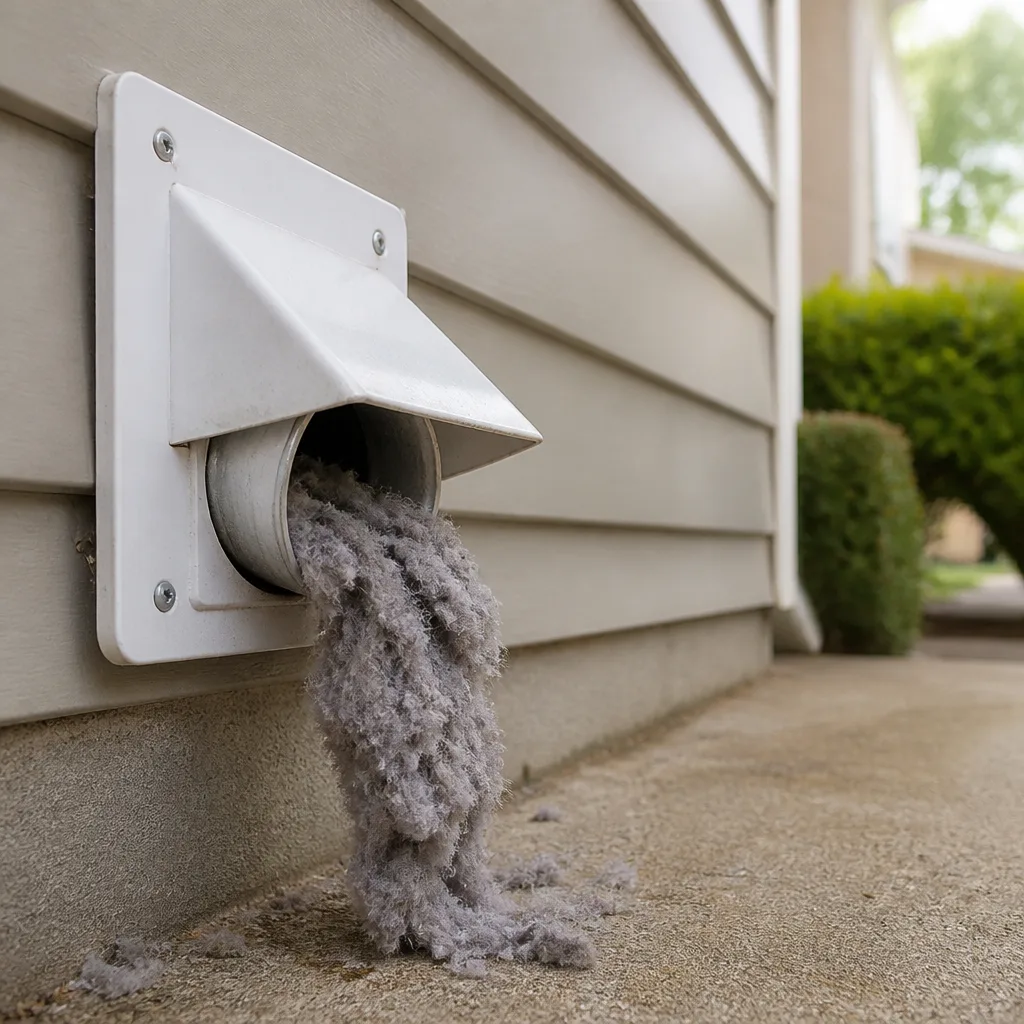 Dryer vent cleaning
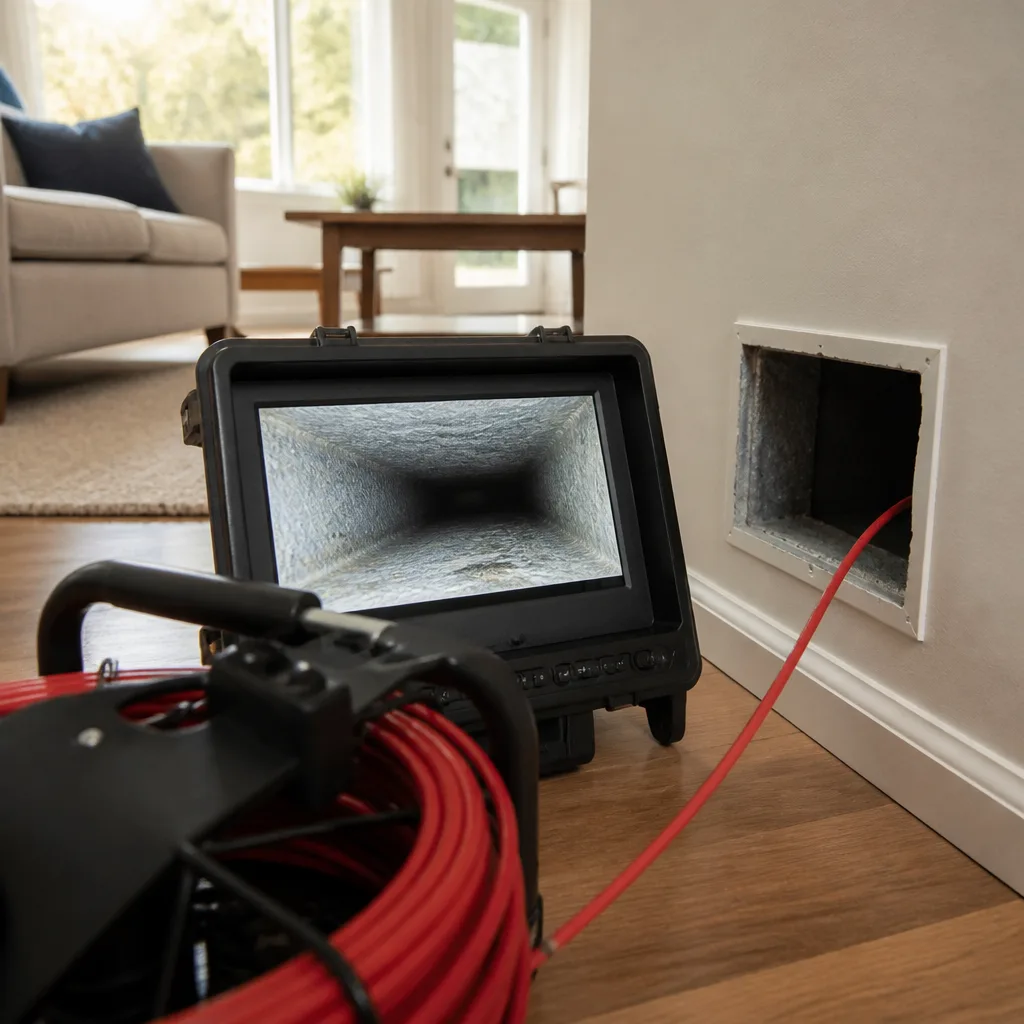 Camera inspection
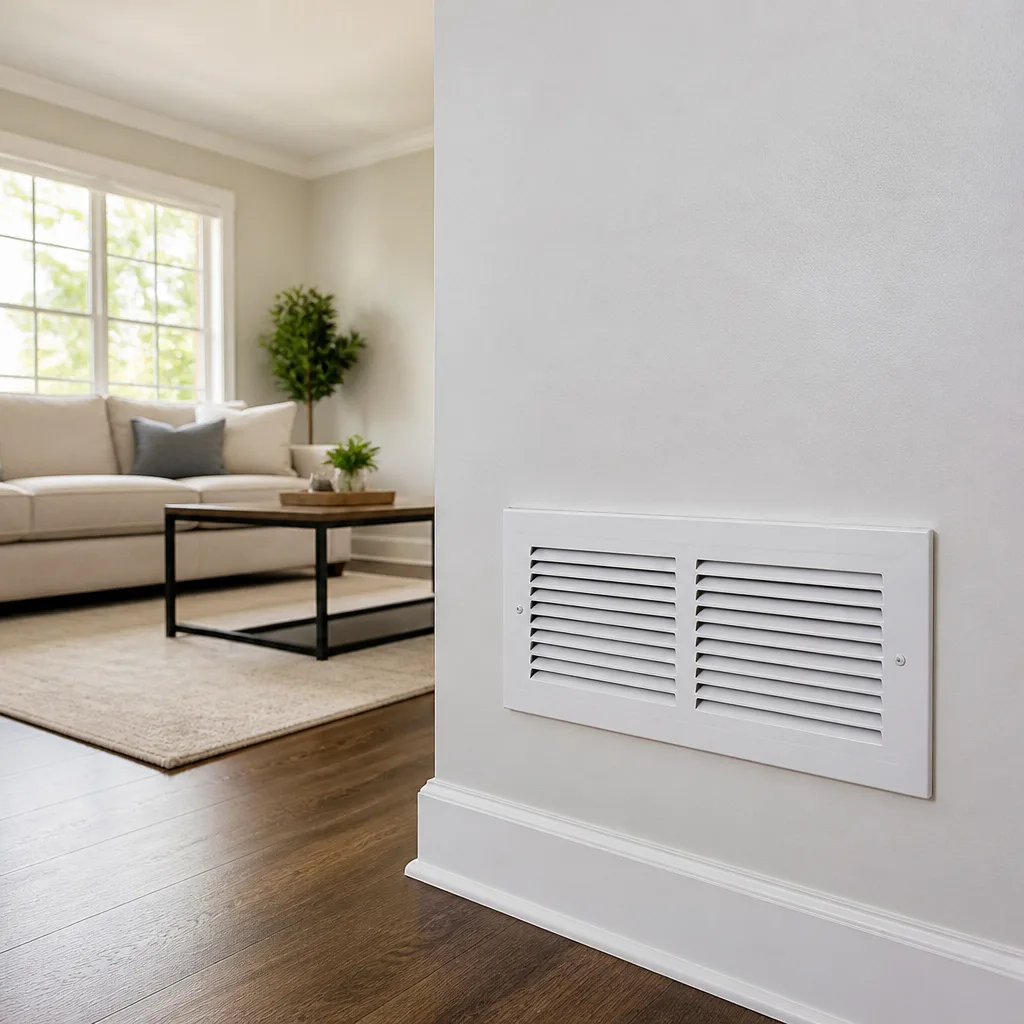 Sanitizing & deodorizing
Whole-system duct and dryer vent check with before-and-after photos - you see exactly what came out of your vents
That "$99 whole-house special" is a bait ad - the real number appears once they are in your hallway, or the "clean" is a shop-vac at the register. We photograph the inside of your ducts before and after instead.
Air Duct Cleaning Maintenance Checklist for Cambridge Homeowners
The filter you change every three months tells you almost nothing about what’s happening 10 feet into your duct system. That 1-inch pleated panel catches some of the dust moving through your return, but it never shows you whether dust is settling on the interior walls of your trunk line, whether a branch duct has come loose behind a wall, or whether the coil side of your air handler is quietly collecting a mat of debris. Most homeowners in Cambridge only think about ducts when something smells wrong or an HVAC tech mentions it. This guide gives you a checklist you can actually run yourself, tied to the system you have and the way Cambridge seasons treat it, so you catch problems before they get expensive.
Quick Answer
Run a duct maintenance check twice a year in Cambridge: once in late spring before cooling season and once in early fall before the heat comes on. Look at register color and airflow balance, note any odor timing relative to HVAC cycles, and photograph your registers and air handler access panel each time to build a record. Schedule professional cleaning every 3 to 5 years for a typical forced-air home, sooner after renovation, pest activity, or a visible dust plume at Registers when the system kicks on.
Styles & brands we work with
- Whole-home duct cleaning
- Dryer vent cleaning
- Camera inspection
- Sanitizing & deodorizing
Table of Contents
- Know Your System Type First
- Observable Checkpoints You Can Run Without Tools
- Seasonal Triggers Specific to Cambridge
- How to Document Duct Condition Over Time
- What Your HVAC Technician’s Annual Notes Should Tell You
- The Full Checklist, Step by Step
- How Often Does It Really Need Doing?
- Common Mistakes to Avoid
Know Your System Type First
Before you check anything, identify what kind of system you’re working with. Cambridge has an unusual housing mix, and the duct checklist for a triple-decker near Inman Square is not the checklist for a converted radiator building or a mini-split condo in Cambridgeport. Three broad categories cover most homes here, and each one gives you different feedback signals.
Ducted forced-air systems
This is the standard case: a furnace or air handler pushing conditioned air through supply and return ducts to registers in each room. You have the most to check here because there’s a whole hidden network at work. Watch for uneven heating between rooms, a whistle at one register and weak flow at another, and dust streaks on the ceiling around supply grilles. Those are all signs of a pressure or leakage problem in the duct run, not just dirt.
Mini-split heat pumps
A ductless mini-split has no central ductwork to clean, but it does have a blower wheel, a coil, and a filter screen behind the front panel, and those collect dust fast in a smaller Cambridge apartment where the unit runs nearly year-round. Your checklist for a mini-split is shorter: pull and rinse the filter screen monthly during heavy-use months, look for dust haze on the coil face, and watch for a musty smell when the unit starts. If you have a mini-split in one room and an old ducted system feeding the rest of the house, both get checked.
Radiator buildings with central air added
A lot of Cambridge homes were built with hot water or steam radiators and had central air retrofitted later. That retrofit often runs ductwork through attics, closets, or soffits, and those runs are frequently shorter, tighter, and more prone to poor sealing than a purpose-built system. In these buildings, airflow balance issues are common and easy to miss. If one room never quite cools while the rest of the house is comfortable, suspect the retrofitted run before you blame the equipment.
Observable Checkpoints You Can Run Without Tools
You don’t need a moisture meter or a manometer to get real information. Your eyes, your nose, and a phone camera will catch most early warning signs. Here’s what to actually look at, what it means, and how to tell normal from something worth acting on.
Register color change
Pull a supply register cover and look at the grille from the inside. Uniform light gray dust is normal between cleanings. Dark, greasy-looking buildup, or a visible mat of fuzz collected on the back of the louvers, points to a heavier debris load moving through the system. If two registers in the same room show very different buildup, that’s a signal about flow, not just dirt.
Airflow balance between rooms
Hold a tissue against each supply register while the fan is running. The tissue should flutter and deflect at a similar strength across registers on the same floor. If it barely moves at one register and blows hard at another, you have a balancing problem, a disconnected branch, or a collapsed flex run. Mark which room is weak and check it again after each cleaning cycle.
Unusual odor timing relative to HVAC cycles
Pay attention to when a smell shows up, not just that it exists. An odor that appears in the first 30 seconds after the fan starts and fades within a minute often points to dust cooking off a heat exchanger or debris in the duct near the air handler. A musty smell that lingers the whole time the fan runs points toward moisture or biological growth somewhere in the system. Odor that only happens on humid days tells you something about the return side and how the system handles moisture.
Dust plume at startup
Watch a register for a few seconds the next time the system kicks on after being off for a while. A light puff of dust is normal. A visible plume that hangs in the air means the duct interior has a real accumulation, and it’s reaching the point where cleaning is worthwhile. Photograph it if you can, since that plume is the single most reliable visual indicator that a cleaning interval has arrived.
Seasonal Triggers Specific to Cambridge
Cambridge has four distinct seasons, and each one leaves a different signature in your ductwork. Rather than following a generic “clean once a year” rule, tie your checks to these predictable moments.
Post-winter heating dust bake-off
By the end of heating season, months of warm air cycling through the ducts has baked a layer of fine dust against the interior walls, especially near the heat exchanger. The first warm week when you switch to cooling is when that dust often gets stirred up. If you notice more dust settling on furniture in late April and May than you did in February, your ducts are telling you something.
Pre-cooling season humidity spike
Late spring in Cambridge brings a stretch of humid days before cooling systems settle into regular use. High moisture in the air combined with a cool duct surface is exactly the setup where condensation forms on the outside of duct runs. If you see moisture or condensation on duct surfaces in a basement or crawl space during this window, that’s a sign to investigate before musty odor develops.
Post-renovation
Any renovation, even a modest kitchen or bathroom update, pushes fine construction dust into the return system if the ductwork isn’t sealed off during the work. Drywall dust is especially hard to remove without professional equipment because it settles into the joints and turns into a fine paste on contact with moisture. If you’ve had work done in the past six months, plan a cleaning before you run the system heavily for the season.
Post-pest season
Late summer into early fall is when mice and other small pests make moves toward warmer interior spaces. In older Cambridge homes with retrofitted duct runs, a compromised branch can become a nesting site or an entry path. If you’ve had any pest activity in the house during the season, add a duct inspection to the fall checklist.
Pre-heating season check
Before you fire up the furnace for the first cold stretch, run through the observable checkpoints one more time. Any dust plume at startup in October has had all summer to build up, and that first heated-air cycle will distribute it into living spaces. It’s the most effective timing for a cleaning that runs ahead of allergy season indoors.
How to Document Duct Condition Over Time
A duct system gives you almost no feedback unless you build a record. The trick is to take the same set of photos from the same spot each time, then compare. This turns a vague “does it need cleaning?” question into something you can actually answer based on visible change. If you’re planning an air duct cleaning, a documented history also helps you get a fair assessment from any technician.
Build a photo record: what to shoot and where
- Every supply register, cover off. Take one photo straight into the register throat and one of the back of the grille. Use the same lighting angle each time.
- Every return register, cover off. Returns show dust load faster than supplies, so they’re the better indicator over time.
- Air handler access panel. If your system has an accessible panel, open it (with power off) and photograph the blower compartment and coil face from the same spot.
- Duct surfaces at accessible runs. Any flex or hard duct you can see in a basement, attic, or closet, photograph the same section from the same angle.
- Written notes on a phone app or notebook. Date, season, and a couple of words on what you saw. “Spring check, weak flow front bedroom, light plume at startup.” That’s enough.
Compare after each cycle
Once you’ve got a first set of photos, keep them. Before each new check, pull up the old ones on your phone and photograph the same registers from the same angle. Visible change is the metric you’re tracking, not the exact amount of dust. A register that looked light gray two years ago and shows dark buildup today has crossed a threshold. A weak room today that was weak in the last record means the flow problem is unresolved and worth diagnosing.
Hand the record to your technician
When you do book a cleaning, show the technician your photo record and the notes. It’s the single most useful thing you can hand over. It tells them where to focus and gives them a baseline to compare against. If you’re booking Duct Cleaning Cambridge, our technicians walk through the before-and-after photos of your own ducts with you, so your record continues with an expert baseline instead of a homeowner guess.
What Your HVAC Technician’s Annual Notes Should Tell You About Duct Condition
Most annual HVAC service visits focus on the equipment: the furnace, the AC coil, or the heat pump. Ductwork tends to get a passing glance at best. But your HVAC technician sees the return side of your system every year, and their notes can carry useful signal about duct condition if you know what to look for and what to ask.
What their notes should mention
- Static pressure readings, if they take them. High static pressure often traces back to undersized or dirty return ductwork.
- Condition of the air filter and how quickly it loaded up since the previous visit.
- Coil cleanliness and whether the technician found debris on the coil face.
- Any signs of condensation, water staining, or biological growth inside the cabinet.
- Comments on blower wheel condition, since a dusty blower often correlates with dusty ductwork.
What to ask if they don’t mention ductwork
If the annual notes say nothing about the ducts, ask directly. Four questions get you a useful conversation:
- Did you notice any dust buildup on the coil or blower during the visit?
- Are you seeing any signs of airflow restriction in the return side?
- Did you spot any disconnected or damaged duct runs you could see during the visit?
- Based on the filter loading rate, does the system look like it’s handling more dust than usual?
Where the notes stop and a duct inspection begins
An HVAC technician is not inspecting duct interiors. Their read is a useful signal but it’s not a replacement for looking inside the system. If your notes suggest heavy filter loading, a dirty blower, or a persistent static pressure issue, that’s the point where a professional duct inspection makes sense. If a cleaning turns up a run of damaged or disconnected ductwork, air duct cleaning alone won’t fix a leak. That’s where an air duct repair capability matters, and it’s worth asking a company upfront whether they can both clean and repair what they find.
The Full Checklist, Step by Step
Here’s the complete cycle in one place, ready to run twice a year. You can print it or copy it into a notes app, and each step stays short enough to actually do.
Phase 1: The walkthrough
- Note the date and season.
- Walk every room and feel the airflow at each supply register with a tissue.
- Note any weak registers, whistling, or uneven comfort between rooms.
- Watch for a dust plume at startup at one representative register.
- Sniff the air in the first 30 seconds after the fan starts. Note any odor and how long it lasts.
Phase 2: The visual check
- Power off the system at the thermostat before removing any register cover.
- Pull each supply and return cover and inspect the inside surface.
- Photograph each register throat and cover from the same angle every time.
- Open the air handler access panel (power off) and photograph the blower and coil.
- Look for any visible duct surfaces in accessible areas: basement, attic, closet runs.
- Note any moisture, staining, or growth on any duct surface.
Phase 3: The filter and record
- Check the air filter condition and replace according to the manufacturer’s recommendation.
- Write down the filter loading rate (light, medium, heavy) at the point of change.
- Update your notes with the date, what you saw, and any changes from the last check.
- Compare to the previous record and decide whether the cleaning interval has arrived.
Phase 4: The professional cleaning (when the checklist says it’s time)
- Book a professional cleaning with a whole-system price confirmed in writing before work starts.
- Ask what equipment will be used. Professional cleaning should involve a rotary brush system plus a HEPA-rated vacuum and, where containment matters, air-filtration equipment like Abatement Technologies units on site.
- Request before-and-after photos of your own system.
- Have any compromised ductwork identified during the cleaning addressed before or during reassembly, ideally by the same company if they repair.
- Update your photo record with the post-cleaning images so the next cycle has a clean baseline.
How Often Does It Really Need Doing?
There’s no single right answer, but there are patterns we’ve seen across Cambridge homes that hold up well enough to plan around. A typical forced-air home with no special circumstances runs on a 3 to 5 year cleaning interval. Homes at either end of that range tend to share certain characteristics.
Signs you’re on the shorter end (2 to 3 years)
- Pets in the home, especially more than one and especially long-haired.
- Recent renovation or any interior work that released dust.
- High-occupancy homes or multi-family buildings in Cambridge where a lot of air cycles through the system daily.
- Persistent allergies or asthma in the household, where you want to keep dust load low regardless of visible dust.
- Older ductwork with known leaks or unsealed joints pulling in dust from unconditioned spaces.
Signs you’re on the longer end (4 to 5+ years)
- A sealed, newer duct system with no visible leaks.
- No pets, no recent renovation, and careful filter maintenance.
- Annual HVAC notes that don’t flag dust or static pressure issues.
- Observable checkpoints that stay consistent from cycle to cycle with no drift.
The case for cleaning sooner regardless of interval
Sometimes the interval doesn’t matter. A dust plume at startup, a visible debris mat on a return register, or a musty smell tied to the system running are all signals that waiting for the calendar isn’t the right move. In our experience, cleaning triggers based on observable signals catch problems earlier and cost less over time than a fixed calendar schedule alone. Combine both: run the calendar interval, but override it whenever a checkpoint flags something.
Common Mistakes to Avoid
- Relying on the filter change as your only duct check. The filter tells you about air quality at that one point in the system, not what’s happening 10 feet into a trunk line. Treat it as one input, not the whole picture.
- Skipping documentation between cleanings. Without photos and notes, you have no way to tell whether the system is getting cleaner, dirtier, or holding steady. Most homeowners in Cambridge who call every year with the same concern have never actually compared the system against itself.
- Pulling register covers and forgetting to power off the system. The blower can kick on at any time and blow debris directly into the room, and moving parts near an open register are a real risk. Power down at the thermostat first.
- Assuming all cleaning quotes are equivalent. A quote that includes rotary brushing, HEPA-rated vacuum containment, and air-filtration equipment is doing fundamentally different work than a cheap vacuum with a hose. Ask what equipment is being brought before you compare prices.
- Treating dryer vent cleaning as optional. Your dryer vent is a fire risk, and it’s a completely separate duct system from your HVAC ducts. It doesn’t get covered by a standard air duct cleaning. Book it separately or as a bundle, and don’t wait for the dryer to start taking twice as long.
- Ignoring a weak room after the checklist flags it. A single weak register usually means a disconnected branch, a collapsed flex run, or a balancing issue. Cleaning won’t fix any of those, and the underlying problem keeps getting worse.
- Skipping pest-season checks in old Cambridge housing. Older homes with retrofitted ductwork have exterior penetrations that can become entry points. A quick check after any pest activity saves a much bigger problem later.
See the difference
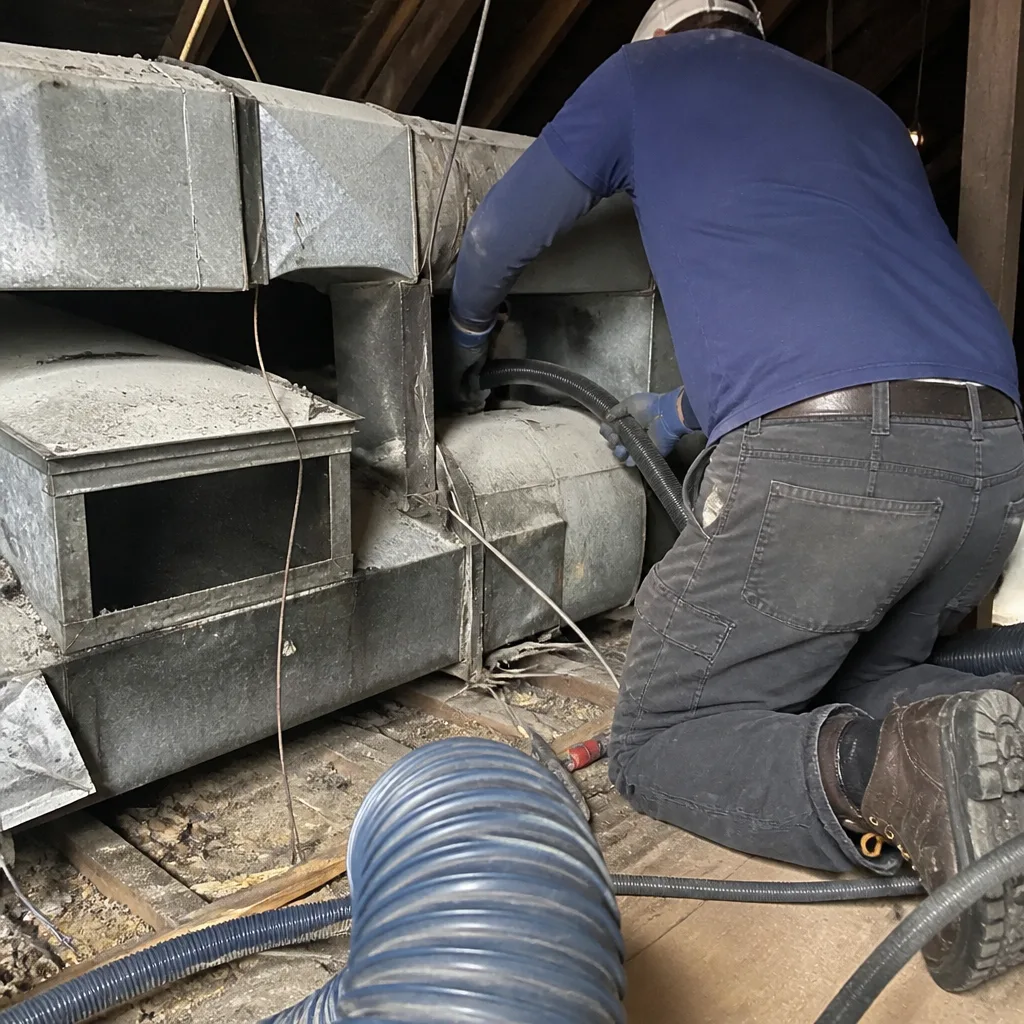 Before
 After
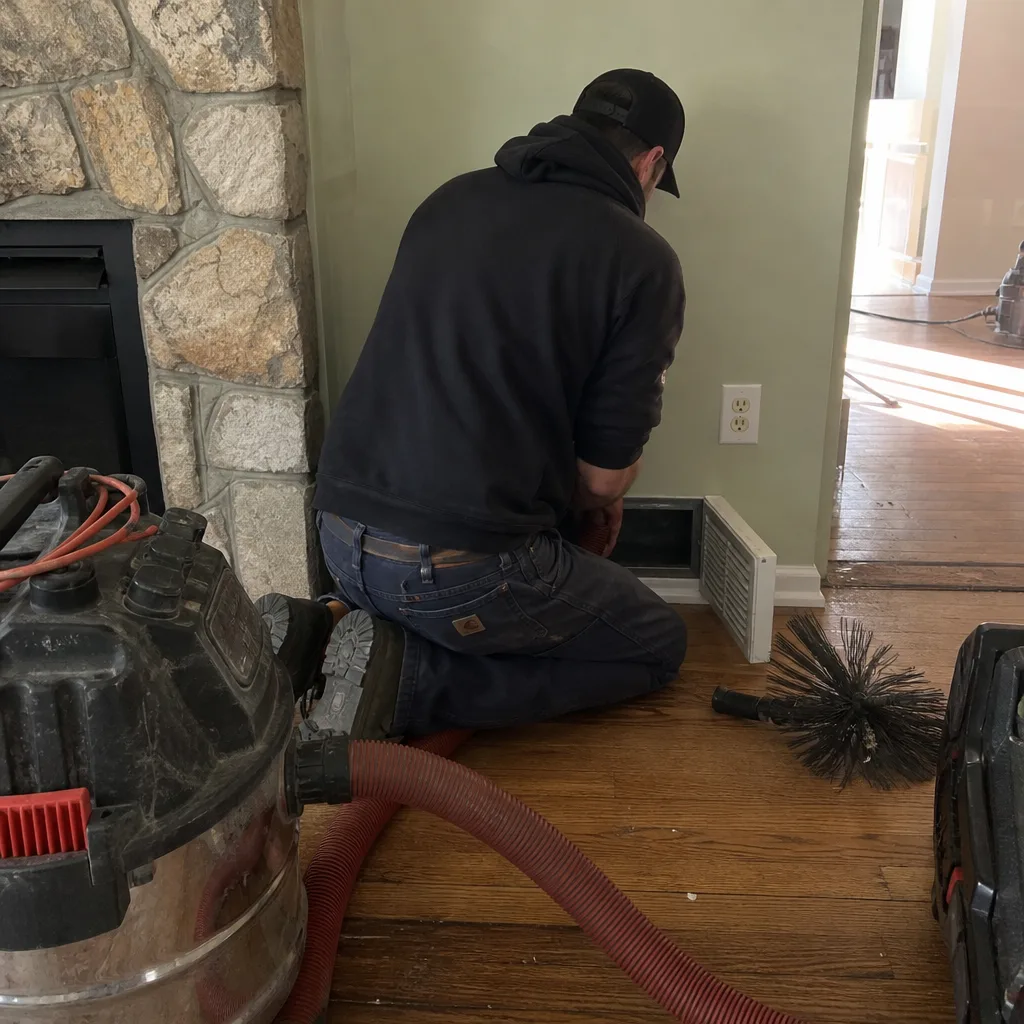 Before
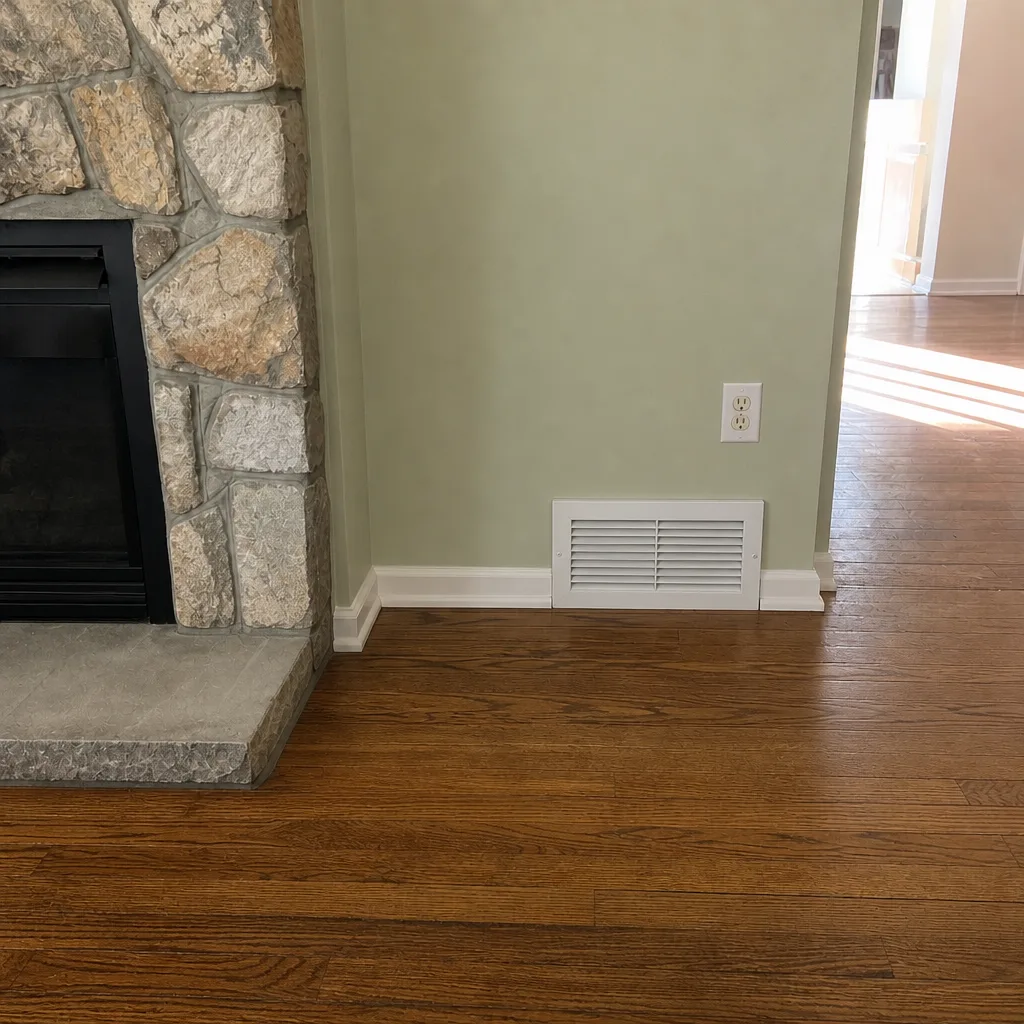 After
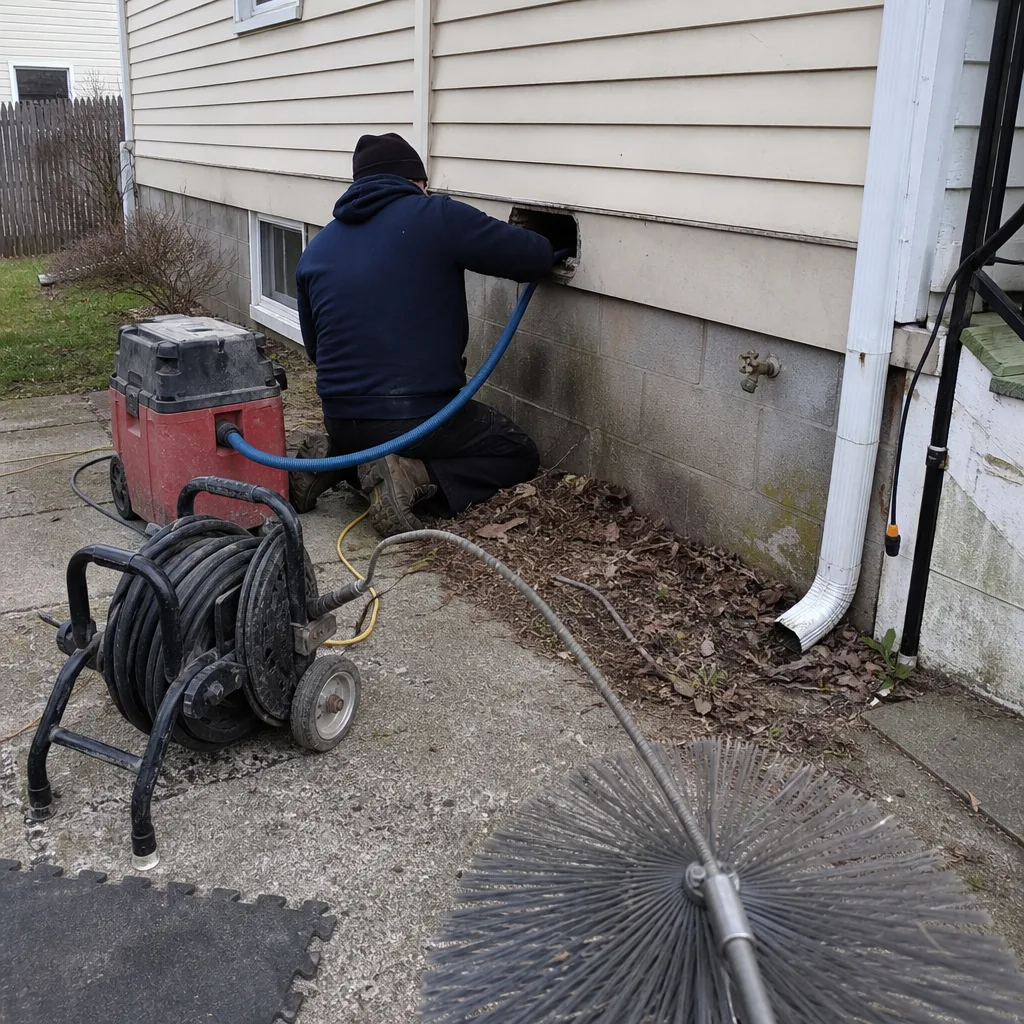 Before
 After
When to Call a Professional
Some checklist items are DIY-appropriate. Others need equipment and eyes that only a trained technician brings. Call a professional when you see any of these: a visible dust plume at startup; a musty or persistent odor that runs the whole time the fan is on; condensation or moisture on any duct surface; a register that turns dark or greasy within a few months; uneven airflow you can’t explain; a dryer that takes noticeably longer than it used to; or any recent pest activity combined with ductwork in a wall or attic cavity. If your HVAC technician’s annual notes flag a dirty blower, heavy filter loading, or elevated static pressure, that’s another good trigger point.
Duct Cleaning Cambridge offers free estimates in Cambridge – call (888) 393-0038. We answer 24/7. Fast dispatch from 7am to 7pm, Sunday through Friday. Our technicians have up to 11 years of experience, and we work with professional-grade Rotobrush and Nikro equipment on-site for the cleaning itself, plus Abatement Technologies filtration on jobs that need containment.
Frequently Asked Questions
Most Cambridge homes with a forced-air system benefit from a cleaning every 3 to 5 years, with the shorter interval for homes with pets, recent renovation, or allergy concerns. Override the calendar whenever an observable checkpoint flags something earlier: a dust plume at startup, dark buildup on registers, persistent odor, or a flagged issue in your HVAC technician’s annual notes. Call (888) 393-0038 for an exact quote – estimates are free.
A mini-split has no central ductwork, so its maintenance focus is the filter screen behind the front panel, the blower wheel, and the coil face. A ducted system has all of those plus the full duct network, registers, and return runs to check. If you have both in the same house (common in Cambridge homes with retrofitted cooling), you run both checklists.
We price per system, and we confirm the whole-system price in writing before work starts. That means no teaser coupon that balloons into a bigger invoice once the technician is on-site, and no per-vent pricing that punishes a bigger house. The written estimate is what you pay, and we include before-and-after photos of your own ducts so you know the work was actually done. Call (888) 393-0038 for an exact quote – estimates are free.
Ask for before-and-after photos of your own system, not stock images. A legitimate cleaning leaves visible evidence: the register interiors should look uniformly lighter, the air handler compartment should be visibly cleaner, and the return-side dust load should be noticeably lower. Rotobrush rotary brushing and Nikro HEPA-rated vacuum equipment produce that kind of visible difference. Vague promises don’t.
No, and it’s important not to assume it is. Your dryer vent is a separate duct system from your HVAC ducts, and it carries a documented fire risk if it’s blocked with lint. Book dryer vent cleaning separately, or ask for it as a bundled service, especially if the dryer takes twice as long as it used to. It’s a genuine safety job, not an upsell.
Usually because the equipment and the scope are different. A cheap quote often means a shop vacuum with a long hose, no rotary brushing, and no HEPA containment, so dust is stirred up rather than removed. Professional cleaning uses rotary brush systems plus HEPA-rated vacuum and, where needed, air-filtration equipment on site. Compare what the quote actually includes before you compare the price tag. Call (888) 393-0038 for an exact quote – estimates are free.
The Bottom Line
The most useful duct maintenance tool you have isn’t a coupon or a reminder calendar. It’s a twice-a-year checklist run on your actual system, backed by photos you take from the same spot every time. Know whether you have a ducted system, a mini-split, or a radiator building with retrofit cooling. Watch for register color change, airflow balance, odor timing, and the startup dust plume. Tie your checks to Cambridge’s seasonal rhythms: post-winter bake-off, pre-cooling humidity, post-renovation dust, post-pest season. Document everything, hand the record to your HVAC tech and your cleaning company, and let the calendar be a fallback rather than the whole plan. Cleaner air starts with clean ducts, and ducts that actually seal. If you want a professional baseline for the record, book a free estimate in Cambridge, and remember that dryer vent cleaning runs on its own schedule because it’s a separate system with its own risk.
Call (888) 393-0038. We answer 24/7. Fast dispatch from 7am to 7pm, Sunday through Friday.
Written by the team at Duct Cleaning Cambridge.